
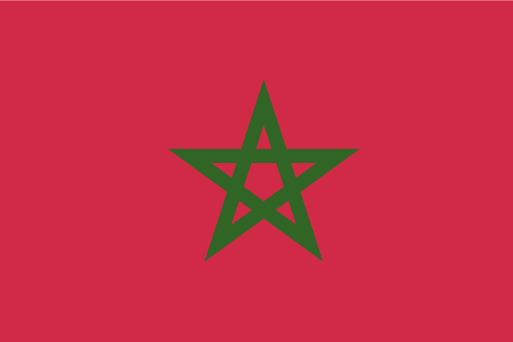
Moving to MoroccoMorocco
JoeviL score
Out of 100, higher is better. An average of 11 criteria: income, safety, health, climate, prices and more.
How we count
Overview
Morocco blends Arab, Amazigh, African and European influences, with historic medinas, mountains, desert and both Atlantic and Mediterranean coasts. Casablanca and Rabat are the main business and administrative centres, Marrakech and Tangier attract creatives and long-stay visitors, and Agadir and Taghazout are popular with surfers.
Pros
- Close to Europe with good flights
- Diverse landscapes and a mild coast
- Affordable living and rich culture
Cons
- Bureaucracy can be slow
- French or Arabic needed for paperwork
- Haggling and pushy sellers in tourist areas
- Capital
- Rabat
- Currency
- Moroccan Dirham (MAD)
- Languages
- Arabic
- Population
- 38.4M
Visas and residence
How to move here
Work contract and residence card
For foreigners hired by a Moroccan employer, whose contract must be approved by the Ministry of Employment via the Taechir platform. The approved contract supports the residence card from the national police (DGSN).
Official pageStudy in Morocco
For students at Moroccan universities and schools, including scholarship holders via the Moroccan Agency for International Cooperation (AMCI). Enrolment is the basis for the student residence card.
Official pageSpouse of a Moroccan or resident
For foreign spouses and children of Moroccans or legal residents. Marriage must be recognised under Moroccan law, which has specific rules for mixed marriages.
Official pageResidence for retirees and people with own income
For pensioners and people with stable foreign income who live in Morocco without working locally. You prove regular income transferred to a Moroccan bank and a place to live.
Official pageBusiness owner or investor
For entrepreneurs who register a company in Morocco and manage it. Regional investment centres help with registration; residence follows the business documents.
Official pageMoney and taxes
How much it costs to live
Overall price level compared with the United States
Consumer prices, change in a year
Share of the labour force without a job
GDP per person at purchasing power parity, a year
Salaries and taxes
a month, before tax
How much do you keep?
- Income tax
- −134MAD
- Social contributions
- −461MAD
- Take-home a month
- 6,250MAD
- Tax and contributions
- 8.7%
Approximate: one person, no children, national taxes only, 2026 rules. Regional taxes and personal reliefs are not included – check the official sources.
Climate
Rabat: average day and night temperature and monthly rain, 2015–2024 (NASA POWER).
Most comfortable: Jan–Dec · Comfort 90+ out of 100: daytime 18–29 °C scores full marks; colder, hotter or rainier months score less.
Life
At birth – also reflects healthcare
Homicides per 100,000 people a year – lower is safer
Life guide
Housing
- Search on Avito, Mubawab and Sarouty; Rabat, Casablanca, Tangier and Marrakech are the main expat cities.
- A signed and legalised lease is needed for the residence card; ask the landlord to sign at the town hall.
- Riads in old medinas are charming but can be damp, noisy and hard to reach by car.
Healthcare
- Morocco has extended mandatory health insurance (AMO) to more groups; employees are covered via their employer.
- Private clinics in big cities are good and affordable; many doctors speak French.
- Carry private insurance for the first months and for evacuation from rural areas.
Banks, SIM and payments
- Attijariwafa, Bank of Africa, CIH and Banque Populaire open accounts; non-residents can use convertible dirham accounts.
- The dirham cannot be freely taken abroad; keep exchange receipts to change money back.
- Maroc Telecom, Orange and inwi sell SIMs with a passport; prepaid data is cheap.
Work
- Call centres, offshoring, tourism, automotive and aerospace plants hire foreigners, especially with French or Spanish.
- Employers must show no Moroccan candidate fits the role in many cases, which limits local jobs for foreigners.
- Remote work for foreign clients is common in Marrakech, Taghazout and Tangier.
Language
- French is the language of business, administration and higher education.
- Darija (Moroccan Arabic) is spoken daily; Amazigh languages dominate in some regions.
- English is growing among young people and in tourism; Spanish is common in the north.
Safety
- Morocco is generally safe; watch for pickpockets and fake guides in medinas.
- A terrorism risk exists as in much of the region; follow official travel advice and local news.
- Avoid the Algerian border area and check advice before travelling to remote desert regions.
First two weeks
- Track your visa-free or visa days; apply for the residence card at the police well before they end.
- Get a legalised lease and a residence certificate from the local authority.
- Buy a SIM, open a bank account and keep exchange receipts.
- If working, make sure the employer has the contract approved on Taechir before you start.
Beta guide, checked against official sources in November 2026. Rules change – always confirm on the official page.
Moving checklist
Your steps in order, with a progress bar. Saved on this device only.
Cities (14)
Places, people, plans and the city chat
People and plans in Morocco
Find company for a walk, a trip or a move – and meet the people who are already there.
Sources: World Bank Open Data (CC BY 4.0), NASA POWER, Wikidata. Each number shows its year. Updated November 8, 2026.