
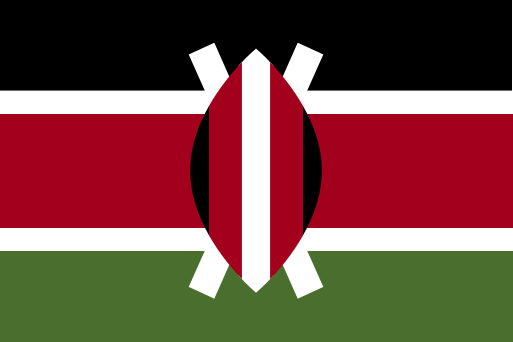
Moving to KenyaKenya
JoeviL score
Out of 100, higher is better. An average of 11 criteria: income, safety, health, climate, prices and more.
How we count
Overview
Kenya is East Africa's main business hub, known for safaris, Indian Ocean beaches and a young, entrepreneurial population. Nairobi is home to many international organisations and a growing tech scene, while Mombasa, Diani and Kilifi offer a relaxed coastal pace.
Pros
- Regional hub for business and NGOs
- World-famous safaris and beaches
- Pleasant climate in Nairobi
Cons
- Safety varies by area
- Heavy traffic in Nairobi
- Uneven infrastructure outside big cities
- Capital
- Nairobi
- Currency
- Kenyan Shilling (KES)
- Languages
- English, Swahili
- Population
- 57.5M
Visas and residence


How to move here
Class D work permit (employment)
For foreigners offered a job by a Kenyan employer, who must show the skill is not available locally. Applications are made online via eCitizen.
Official pageDigital nomad permit
For remote workers employed or earning outside Kenya who want to live there. Proof of foreign income and health cover is required – see the official page for details.
Official pageClass G permit (investor or trader)
For people starting or investing in a business in Kenya. You need a registered company and proof of investment capital.
Official pageClass K permit (resident with own income)
For retirees and people with assured income from outside Kenya who will not work locally. You must prove a minimum annual income – see the official page.
Official pageStudent pass
For students admitted to Kenyan universities and colleges. The institution's admission letter and proof of funds are required.
Official pageRefugee status
For people fleeing persecution or conflict, mostly from neighbouring countries. Applications are handled by the Department of Refugee Services.
Official pageMoney and taxes
How much it costs to live
Average salary after tax, a month (the average is pulled up by high earners)
Overall price level compared with the United States
Consumer prices, change in a year
Share of the labour force without a job
GDP per person at purchasing power parity, a year
Salaries and taxes
a month, before tax
a month, before tax
How much do you keep?
- Income tax
- −14,556KES
- Social contributions
- −8,441KES
- Take-home a month
- 59,353KES
- Tax and contributions
- 27.9%
Approximate: one person, no children, national taxes only, 2026 rules. Regional taxes and personal reliefs are not included – check the official sources.
Sole proprietor, PIT + SHIF + AHL – ≈31.9% at 30,000$ a year, ≈33.6% at 60,000$
Income tax and mandatory contributions together, for one person without real expenses; VAT not included. Source
Official sources
- https://gaa.go.ke/sites/default/files/2026-02/Notice%20To%20Employers%20%E2%80%94%20Year%204%20%282026%29%20NSSF%20Contribution%20Rates%20.pdf
- https://the-star.co.ke/news/2026-07-06-employers-feel-pinch-as-12-pay-rise-takes-effect
- https://www.knbs.or.ke/wp-content/uploads/2026/04/2026-Facts-and-Figures.pdf
- https://www.kra.go.ke/
Climate
Nairobi: average day and night temperature and monthly rain, 2015–2024 (NASA POWER).
Most comfortable: Jan–Dec · Comfort 90+ out of 100: daytime 18–29 °C scores full marks; colder, hotter or rainier months score less.
Life
At birth – also reflects healthcare
Homicides per 100,000 people a year – lower is safer
Life guide
Housing
- Search on BuyRentKenya, Property24 Kenya and Facebook groups; Westlands, Kilimani and Lavington are popular in Nairobi.
- Choose compounds with guards and backup water and power; check traffic routes, as commutes can be long.
- Deposits are often one to two months' rent; get receipts for every payment.
Healthcare
- Private hospitals like Aga Khan and Nairobi Hospital are good; buy private insurance with evacuation cover.
- Residents may need to register with the Social Health Authority (SHA), which replaced NHIF.
- Malaria is present outside Nairobi's highlands; check yellow fever vaccination rules before entry.
Banks, SIM and payments
- M-Pesa mobile money is used for almost everything; register a Safaricom line with your passport to use it.
- Equity, KCB, Stanbic and NCBA open accounts for foreigners with a permit and KRA PIN.
- Airtel is an alternative network; cards work in malls, cash and M-Pesa elsewhere.
Work
- NGOs, UN agencies, tech start-ups and agriculture hire foreigners; Nairobi is a regional hub.
- Local hiring of foreigners is limited by work permit rules; many come with international employers.
- Networking via LinkedIn, BrighterMonday and expat groups is key.
Language
- English is official and used in business, government and schools.
- Swahili is the everyday national language; basic phrases help a lot in markets and with drivers.
- English alone is enough to settle in Nairobi or Mombasa.
Safety
- Street crime and car-jackings occur in Nairobi; avoid walking at night and use app taxis.
- Avoid areas near the Somali border and parts of the north-east and coast; check official travel advice.
- Protests can turn violent; stay away from demonstrations.
First two weeks
- Make sure your ETA or permit is valid and keep copies; apply for permits only via eCitizen.
- Get a Safaricom SIM and activate M-Pesa.
- Obtain a KRA PIN via iTax if you work, rent formally or open a bank account.
- Register foreign national details (alien card) if your permit requires it.
Beta guide, checked against official sources in November 2026. Rules change – always confirm on the official page.
Moving checklist
Your steps in order, with a progress bar. Saved on this device only.
Cities (8)
Places, people, plans and the city chat
People and plans in Kenya
Find company for a walk, a trip or a move – and meet the people who are already there.
Sources: World Bank Open Data (CC BY 4.0), NASA POWER, Wikidata. Each number shows its year. Updated November 8, 2026.